The Essentials can serve as an excellent prenatal multivitamin. Proper amounts of folic acid, zinc, and other important vitamins and minerals are all present in this product.
It is important for women who are planning to become pregnant (and those who are currently pregnant) to consume at least 400 mcg of folic acid per day. A full daily dosage of the Essentials provides 1,000 mcg of folic acid. If a mother does not have adequate intake of folic acid within the first few months of pregnancy, the fetus may develop neural tube defects (such as spina bifida). Studies show that taking at least 400 mcg of folic acid can reduce the risk of these birth defects by as much as 70%.
It is important for every expectant mother to ask a doctor about taking an iron supplement, as iron is not included in the Essentials. During pregnancy, women should generally supplement with somewhere between 28 and 90 mg of elemental iron per day, depending on their needs.
Research has also shown that essential fatty acids are critical for developing babies. It may be a good idea to supplement with BiOmega during pregnancy. Before taking any additional or different supplements, discuss them fully with your doctor, as it is important to protect the growing baby and mother.
READ VERY CAREFULLY - The following products, taken as directed, are strongly recommended for women who are pregnant or lactating:
* Essentials
* Active Calcium
* BiOmega
The following products, taken as directed, are generally recommended for women who are pregnant or lactating, based on individual needs:
* USANA Foods (Nutrimeal, Nutrition Bar, Fibergy)
The following products, taken as directed, are recommended for women who are pregnant or lactating ONLY on the advice of a physician:
* HealthPak
* Proflavanol & Proflavanol 90
* E-Prime
* Poly C
* Ginkgo-PS
* Visionex
The following products are NOT generally for use by pregnant or lactating women:
* CoQuinone 30
* Hepasil DTX
* Procosa II
* PhytoEstrin
* Palmetto Plus
Showing posts with label Vitamin C. Show all posts
Showing posts with label Vitamin C. Show all posts

Supplemental Vitamins During Breast Cancer Treatment May Reduce Mortality Risk
 In a large population-based study of Chinese women with breast cancer, multivitamin use reduced the risk of mortality and the risk of cancer recurrence.
Nutritional supplement use during cancer treatment is currently controversial. Antioxidants may protect normal cells from oxidative damage that occurs during radiotherapy and certain chemotherapy regimens. However, the same mechanism could protect tumor cells and potentially reduce effectiveness of some cancer treatments. Recently, researchers evaluated vitamin supplement use during cancer treatment and in the first six months after breast cancer diagnosis, looking for correlations with total mortality and cancer recurrence.
A population-based prospective cohort study of 4,877 women diagnosed with invasive breast cancer was conducted between March of 2002 and April of 2006 in Shanghai, China. The women (aged 20-75) were interviewed approximately six months after diagnosis, then followed-up with later via in-person interviews.
During an average follow-up of 4.1 years, 444 deaths and 532 recurrences occurred. Vitamin use shortly after breast cancer diagnosis was associated with reduced risk of mortality and recurrence. Women who used nutritional supplements (vitamin E, vitamin C, multivitamins) had an 18% reduction in risk of mortality and a 22% reduced recurrence risk. The inverse association was found regardless of whether vitamin use was concurrent or non-concurrent with chemotherapy, but was only present among patients who did not receive radiotherapy.
Vitamin supplement use in the first six months after breast cancer diagnosis may be associated with reduced risk of mortality and recurrence. The results of this study do not support the current recommendation that all breast cancer patients should avoid use of vitamin supplements.
Nechuta S, et al. Vitamin supplement use during breast cancer treatment and survival: a prospective cohort study. Cancer Epidemiol Biomarkers Prev, 21 Dec 2010.
High Fish & Vegetable Intake Reduces Risk of Breast Cancer
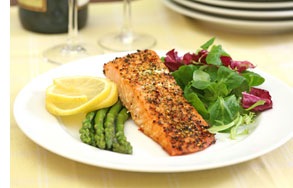
After skin cancer, breast cancer is the most common type of cancer in women. In U.S. women, more than 1 in 4 cancers (28%) are breast cancers. Historically, breast cancer has been much more prevalent in Western countries than in Asian countries, although the gap has declined dramatically in recent years. A new study published by researchers at South Korea's National Cancer Center sheds new light on one possible explanation for this effect.
In this study, 357 breast cancer patients between the ages of 25 and 77 were matched with 357 healthy controls. A trained dietitian conducted face-to-face interviews with each study subject, collecting detailed information on lifestyle (including physical activity), demographics, and diet.
410 types of reported food were grouped into 39 food groups based on nutrient profiles and culinary usage. These food groups were then used to calculate two "dietary patterns": one characterized by regular consumption of a variety of vegetables, seafoods, and soybean products, and another characterized by above-average intake of meat (non-fish) and starch-rich foods (bread, noodles, pizza, etc). The "vegetable-seafood" diet is representative of a traditional Korean diet, while the "meat-starch" diet is representative of a traditional Western diet. Statistical analysis were then performed to look for correlations between demographics, lifestyle factors, and these two diet patterns.
Breast cancer occurrence in this study correlated strongly with higher BMI (p=0.006), lower levels of dietary supplement use (p=0.005), and low levels of physical activity (p=0.021). Additionally, a significant inverse association was seen between the vegetable-seafood pattern and breast cancer risk, while no correlation (positive or negative) was seen for the meat-starch group. Additional analysis correlated the vegetable-seafood diet with higher intakes of fiber, vitamin A, carotene, vitamin C, vitamin E, folate, and calcium (p < 0.001 for all).
This study provides strong evidence for a diet high in vegetables and seafood reducing the risk of breast cancer. As the authors note, the increasing Westernization of Korean diets may explain - at least in part - the rising rates of breast cancer in that country.
Cho YA, Kim J, Shin A, Park KS, Ro J. Dietary Patterns and Breast Cancer Risk in Korean Women. 2010. Nutrition and Cancer 62(8):1161-9.
Vitamin C (Mineral Ascorbates)
Vitamin C, also known as ascorbic acid or ascorbate, plays two important roles in the body. First, it is a cofactor or cosubstrate for eight enzyme systems involved in various functions, including collagen synthesis, ATP synthesis in mitochondria, and hormone biosynthesis. Second, vitamin C is a powerful water-soluble antioxidant with a vital role in protecting cells and tissues from damaging oxidizing agents, including superoxides, hydroxyl radicals, and other free radicals. All these functions derive from one fundamental property: vitamin C is a powerful reducing agent (or electron donor) capable of neutralizing reactive oxidants.
Related functions performed by vitamin C include regenerating vitamin E to its active state, promoting iron absorption in the intestines by keeping iron in its reduced form, and participation in DNA transcription and protein synthesis regulation.
The richest dietary sources of vitamin C include cantaloupe, grapefruit, honeydew, kiwi, mango, oranges and other citrus fruits, strawberries, and watermelon. The richest vegetable sources include asparagus, broccoli, brussels sprouts, dark green leafy vegetables, and peppers.
Although vitamin C is generally non-toxic, very high dosages (several grams or more) may cause or contribute to gastrointestinal distress and diarrhea.
Additional Resources:
Related functions performed by vitamin C include regenerating vitamin E to its active state, promoting iron absorption in the intestines by keeping iron in its reduced form, and participation in DNA transcription and protein synthesis regulation.
The richest dietary sources of vitamin C include cantaloupe, grapefruit, honeydew, kiwi, mango, oranges and other citrus fruits, strawberries, and watermelon. The richest vegetable sources include asparagus, broccoli, brussels sprouts, dark green leafy vegetables, and peppers.
Although vitamin C is generally non-toxic, very high dosages (several grams or more) may cause or contribute to gastrointestinal distress and diarrhea.
Additional Resources:
- Vitamin C - U.S. National Library of Medicine
- Vitamin C - Physicians' Desktop Reference
- Vitamin C - Mayo Clinic
- Vitamin C - Linus Pauling Institute
- Vitamin C - Wikipedia
Subscribe to:
Posts (Atom)
