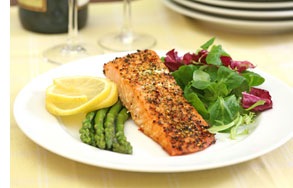
In a new study, researchers found a strong correlation between a diet high in vegetables and seafood and reduced risk of breast cancer. Lower BMI, high levels of dietary supplement use, and increased physical activity also correlated with reduced breast cancer risk.
After skin cancer, breast cancer is the most common type of cancer in women. In U.S. women, more than 1 in 4 cancers (28%) are breast cancers. Historically, breast cancer has been much more prevalent in Western countries than in Asian countries, although the gap has declined dramatically in recent years. A new study published by researchers at South Korea's National Cancer Center sheds new light on one possible explanation for this effect.
In this study, 357 breast cancer patients between the ages of 25 and 77 were matched with 357 healthy controls. A trained dietitian conducted face-to-face interviews with each study subject, collecting detailed information on lifestyle (including physical activity), demographics, and diet.
410 types of reported food were grouped into 39 food groups based on nutrient profiles and culinary usage. These food groups were then used to calculate two "dietary patterns": one characterized by regular consumption of a variety of vegetables, seafoods, and soybean products, and another characterized by above-average intake of meat (non-fish) and starch-rich foods (bread, noodles, pizza, etc). The "vegetable-seafood" diet is representative of a traditional Korean diet, while the "meat-starch" diet is representative of a traditional Western diet. Statistical analysis were then performed to look for correlations between demographics, lifestyle factors, and these two diet patterns.
Breast cancer occurrence in this study correlated strongly with higher BMI (p=0.006), lower levels of dietary supplement use (p=0.005), and low levels of physical activity (p=0.021). Additionally, a significant inverse association was seen between the vegetable-seafood pattern and breast cancer risk, while no correlation (positive or negative) was seen for the meat-starch group. Additional analysis correlated the vegetable-seafood diet with higher intakes of fiber, vitamin A, carotene, vitamin C, vitamin E, folate, and calcium (p < 0.001 for all).
This study provides strong evidence for a diet high in vegetables and seafood reducing the risk of breast cancer. As the authors note, the increasing Westernization of Korean diets may explain - at least in part - the rising rates of breast cancer in that country.
Cho YA, Kim J, Shin A, Park KS, Ro J. Dietary Patterns and Breast Cancer Risk in Korean Women. 2010. Nutrition and Cancer 62(8):1161-9.
Showing posts with label Folic Acid. Show all posts
Folic Acid (Vitamin B9)
Folic acid is a water-soluble B vitamin with a role as a regulating coenzyme for cellular metabolism and cell division.
Folic acid helps form the building blocks of DNA and RNA needed for protein synthesis in human cells. Rapidly growing tissues - such as those of a fetus - and rapidly regenerating cells - like red blood cells and immune cells - have an especially high need for folic acid.
Folic acid requirements increase during pregnancy. Deficiencies of folic acid during pregnancy are associated with low birth weight and an increased incidence of neural tube defects, including anencephaly and spina bifida. In one study, women at high risk of giving birth to babies with neural tube defects lowered their risk by as much as 72% by taking folic acid supplements prior to and during pregnancy. Medical experts, other healthcare professionals, and the March of Dimes recommend that all women of childbearing age supplement with 400 mcg of folic acid per day. Such supplementation would protect against the formation of neural tube defects during the time between conception and when pregnancy is discovered. If a woman waits until after pregnancy to begin taking folic acid supplements, it is likely too late to prevent a neural tube defect.
Folic acid deficiency has also been associated with high homocysteine levels and an increased risk for stroke, heart disease, and cognitive diseases like Alzheimer's disease. A folic acid deficiency may also result in a form of anemia (which can be remedied with supplementation).
It is difficult to accurately estimate how much folic acid is present in food. The best food sources appear to be vegetables (asparagus, broccoli, brussels sprouts, legumes), nuts, and seeds.
Additional Resources:
Folic acid helps form the building blocks of DNA and RNA needed for protein synthesis in human cells. Rapidly growing tissues - such as those of a fetus - and rapidly regenerating cells - like red blood cells and immune cells - have an especially high need for folic acid.
Folic acid requirements increase during pregnancy. Deficiencies of folic acid during pregnancy are associated with low birth weight and an increased incidence of neural tube defects, including anencephaly and spina bifida. In one study, women at high risk of giving birth to babies with neural tube defects lowered their risk by as much as 72% by taking folic acid supplements prior to and during pregnancy. Medical experts, other healthcare professionals, and the March of Dimes recommend that all women of childbearing age supplement with 400 mcg of folic acid per day. Such supplementation would protect against the formation of neural tube defects during the time between conception and when pregnancy is discovered. If a woman waits until after pregnancy to begin taking folic acid supplements, it is likely too late to prevent a neural tube defect.
Folic acid deficiency has also been associated with high homocysteine levels and an increased risk for stroke, heart disease, and cognitive diseases like Alzheimer's disease. A folic acid deficiency may also result in a form of anemia (which can be remedied with supplementation).
It is difficult to accurately estimate how much folic acid is present in food. The best food sources appear to be vegetables (asparagus, broccoli, brussels sprouts, legumes), nuts, and seeds.
Additional Resources:
- Dietary Supplement Fact Sheet: Folate (from the National Institute of Health)
- Folic acid (folate) - U.S. National Library of Medicine
- Folic acid - Centers for Disease Control and Prevention (CDC)
- Folic acid - American Pregnancy Association
- Folic acid - American Cancer Society
- Folic acid - Wikipedia
- Folic acid - Linus Pauling Institute
Subscribe to:
Posts (Atom)